
Author: admin

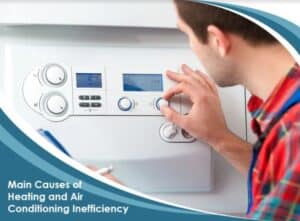
Main Causes of Heating and Air Conditioning Inefficiency

When you notice a sudden increase in your utility bills or your home is not as cozy as it should be, there could be a problem with your heating and air conditioning units. After all, they account for about half of your overall energy consumption. Several factors can cause them to become inefficient. Some of these are evident, while others require scrutiny. Heating and Air Conditioning: What Causes Poor Energy Efficiency? Faulty heating and air conditioning systems not only compromise your home’s comfort and energy efficiency but can also affect your health. That is why when you notice any of these problems, always seek the help of an expert. Improper Size. A unit that is too small for your home will work harder to regulate the proper indoor temperature. Conversely, a unit that’s too big will cycle on and off many times, which wastes energy. When investing in an HVAC system, have a professional to measure your home’s energy loss rate to identify the right size for your needs. Outdated Unit. According to the Department of Energy, the service life of an HVAC system is about 15 to 20 years when properly maintained. Most older units, however, operate efficiently for about 10 years. When
Read More »

Top Resources on Thermostats and Energy Savings

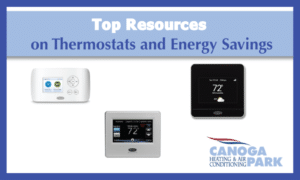
The thermostat is one home device that many homeowners take for granted or at least tend to forget from time to time. However, the thermostat plays a vital role in not only keeping your home environment comfortable but also helping you save energy throughout the year. If you’re curious about how you can better utilize your thermostat to maximize energy savings, take a look at the resources below. Top Resources on Thermostats and Energy Savings If you’re ready to learn more about thermostats and how they help you save energy, then you’ve come to the right place. Here are some helpful resources that will help you better understand how smart and programmable thermostats work and how they help you save more energy each month: Thermostats from Energy.Gov This article on thermostats from the U.S. Department of Energy is a great place to start if you want to learn more about thermostats and how they contribute to energy savings. The article covers general thermostat operation, limitations for certain types of heating, and more information about choosing a programmable thermostat. If you are considering buying a new thermostat, this is a must-read. What Can a Smart Thermostat Do that Mine Can’t Do? In this article

Read More »

How To Find a Quality HVAC Contractor

Most homeowners know that the comfort of their home relies on having a heating or cooling system that is able to keep their home a comfortable temperature. Of course, quality equipment can be an important part of the reliability of your home’s HVAC system, but an experienced and dependable HVAC contractor is also important. In fact, now is the perfect time to call in a professional HVAC contractor for end of summer air conditioning maintenance. One of the best ways to find a leading HVAC contractor is to ask family or friends for recommendations. After all, if someone you know and trust is able to recommend a contractor, you are already ahead of the game. If you don’t have any recommendations to start from, contact some of the contractors in your area and ask for references. However, it is important that once you get these references that you actually call and ask questions. Find out what type of work was done, if it was done on time and if there were any problems. Of course, any HVAC contractor you consider should be licensed and insured to perform their services in your area. Leading HVAC contractors also offer quality products, such

Read More »

Air purification

Most heating and air conditioning systems use a basic 1: air filter. These filters were never designed to improve air quality. They were designed to help keep the equipment clean. The average filter only removes 3-5% of the particles that pass through it. Today, we have many different types of filters available to help remove large amounts of particulate from the air. Air Purifiers Services in MightyServ If you suffer from allergies, asthma, hay fever or other respiratory problem, we have solutions that can greatly improve your quality of life. For the most extreme cases we can even provide affordable equipment designed to remove weapon grade anthrax from your air. We offer a variety of air purifiers designed to improve the air quality of your home or business. Below find the specifications for one of our most popular brands of purifiers: INFINITY AIR PURIFIERPeformance: MERV 15Warranty: 5-year limitedEfficiency: Rated Airflow (cubic feet/minute) 1600 or 2000Technology: Pressure Drop (in wc) at Rated Airflow 0.25, Type Three-stage electronic and mediaAesthetics: Paint Epoxy Coated Cabinet, Heavy Gage Steel Installation, Up-flow, Down-flow, Horizontal Give us a call and we will be happy to help.

Read More »

Title 24 – 2006 – California Code of Regulations for Energy Efficiency

Title 24 is a portion of the California Code of Regulations that pertains to energy efficiency standards in the construction of residential and non-residential buildings. It was enacted in 1978 (Warren- Alquist Act) in response to a legislative mandate to reduce California’s energy consumption. The California Energy Commission (CEC)put this ruling into effect to reduce energy bills, to increase energy delivery system reliability and to contribute to an improved economic condition for the state. Since 1978, several amendments were made to update energy standards as a reflection of improvements in energy technology and energy conservation. Effective October 1, 2005, the CEC updated Title 24 standards to further reduce California’s energy consumption. Starting on this date, when a CA homeowner is changing out the heating or air-conditioning (HVAC) equipment (the air handler, the outdoor condenser of a split air-conditioner or heat pump, cooling or heating coil, or the furnace heat exchanger) in an existing house, contractors in certain climate zones will be required to test the ducts for leakage and seal the leaking ducts. Third-party field verification by a certified home energy rater (HERS – Home Energy Rating Service) is also required to insure that the duct sealing is accomplished according

Read More »

Reduce Your Carbon Footprint With Insulation

Attic insulation is the way to go if you want to keep your home warm in the winter, cool in the summer, and save energy throughout the year. The United States Department of Energy has stated that adding insulation to your attic is one of the best home comfort measures you can take. Most homeowners don’t realize the amount of money that they’re throwing away by not installing new insulation. Upgrading existing attic insulation is also a viable cost-effective solution. Having qualified insulation installers line your attic with well-crafted insulation is one more step to living a more pleasant lifestyle, while reducing your overall heating bill and contributing to the environment. This winter is sure to bring about a definite chill in the air, so go the easy, eco-friendly route and install attic insulation.

Read More »

Las vegas hosts hvacr conference

The 2010 National HVACR (Heating Ventilation Air Conditioning and Refrigeration) Educators and Trainers Conference is scheduled to hit Las Vegas March 14-16 at the Tropicana Hotel. The annual conference is open to anyone in the heating and air conditioning industry including, contractors, wholesalers, and educators. The main topics to be discussed revolve around new technologies, changes in federal guidelines, energy efficiency practices, training, and environmentally friendly technologies. Leaders in the heating and air conditioning field will host the event. Carrier, DuPont, the U.S. Environmental Protection Agency, the California Energy Commission, along with a host of other experts, will present the latest in industry standards and set future goals. The conference includes breakfast and lunch for the March 15 and 16 dates and admission to all general sessions, breakout sessions, roundtables, industry exhibits and tours. Exams will also be offered, at no extra charge, to help with educator credentials.

Read More »

Before you call for repair

First of all, don’t panic! Check a few basic things before calling for service, it may say you some money! Check these simple items: 1. If the system does not turn on, check your electrical circuit breaker. Be sure and check the condensing unit and the furnace breaker. Remember that many systems have two breakers. 2. Be sure your thermostat is turned on. If you have any questions about the operation of your thermostat, be sure and check the product section of our website for a manual on your thermostat. Or just give us a call, we may be able to help. 3. If your fan is running constantly, check to see if the fan switch is turned on. Many people mistake this for an actual problem. Give us a call if you have any further questions. (818) 348-4768

Read More »

Stimulus tax credit

On February 17, 2009, President Obama signed into law the historic American Recovery and Reinvestment Act of 2009. As a result of this act, the federal government announced tax credits for consumers who purchase qualifying high-efficiency heating and cooling products for their homes. Until December 31, 2010, certain high-efficiency HVAC products qualify for a tax credit equal to 30% of their installed cost, up to a maximum credit of $1,500. Some restrictions apply. Your tax advisor can help you determine how these credits may help you. It’s the perfect opportunity to upgrade your home with an energy-efficient heating and cooling system by Carrier plus get a major tax break too! Carrier has more system combinations that qualify for federal tax credits than any other manufacturer. To find out what’s best for your home, give us a call today.

Read More »

What is IAQ (Indoor Air Quality)?

Indoor air quality in North American homes may not be as safe as we perceive it to be. According to research, about 96% of homes had one air quality issue at the minimum. This finding is supported by the EPA (Environmental Protection Agency), which estimates that indoor air in most homes can be 5 times dirtier than air outside. Majority of homes, for example, had high levels of common pollutants such as dust, pollen, harmful gases, chemicals and viruses. Are You Safe Indoors? As shown by figures that have resulted from surveys and research, many homes suffer from indoor air quality that is below par. Common pollutants such as dust, along with biological pollutants such as bacteria, molds, animal dander and dust mites often contribute to health issues that are serious enough to cause sickness and certain diseases, particularly among sensitive individuals such as children and the elderly. In homes where there is at least one smoker, the threat to health also increases. The American Lung Association states that tobacco smoke (frequently inhaled as secondhand smoke) contains 4,000 different chemicals, 200 of which are known poisons, including carbon monoxide, formaldehyde and carcinogens. Improving Indoor Air Quality Increasing the quality of

Read More »
Archives

MightyBucks Program