
Last call for savings: Federal tax credits for home systems end December 31st
Here’s something worth being thankful for: if you’ve been putting off upgrading your home’s systems, there’s still time to save big!


Here’s something worth being thankful for: if you’ve been putting off upgrading your home’s systems, there’s still time to save big!

If you’re a proud pet parent in Canoga Park or the San Fernando Valley, you already know how much love and joy furry friends bring into a home. But alongside the tail wags and cozy snuggles, pets can also introduce dander, hair, and odors that compromise your indoor air quality (IAQ). With the warmer months approaching, and your AC system doing more heavy lifting, now is the perfect time to focus on how you can breathe easier—without sacrificing cuddle time. Why Pet Owners Should Prioritize IAQ Indoor air quality isn’t just about comfort—it’s about health. According to the EPA, indoor air can be two to five times more polluted than outdoor air, and for pet owners, those levels can be even higher. Pet dander (tiny skin flakes), fur, saliva proteins, and tracked-in allergens can linger in your home’s air, ductwork, and even settle in your HVAC filters. If left unaddressed, these particles may aggravate allergies, asthma, and other respiratory issues—especially for kids, seniors, or immunocompromised individuals. Top IAQ Challenges in Pet-Friendly Homes How MightyServ Can Help Improve IAQ for Pet Owners MightyServ has been helping families in Canoga Park and across the San Fernando Valley breathe cleaner air since 1963.

Improve your home’s air this spring with the top 5 indoor air quality upgrades for allergy season. Learn how MightyServ helps San Fernando Valley families breathe easier.
Here’s why a spring tune-up is essential and what you can expect when you schedule one with MightyServ.

Don’t let your return from paradise be ruined by a home that feels like the inside of a furnace!

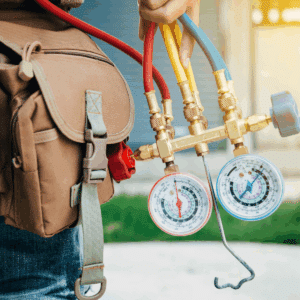
Ever glanced at your AC technician’s toolkit and wondered what all those gadgets actually do? There’s a whole world of equipment behind every successful repair!

That first summer energy bill has a way of knocking the wind out of you. One minute you’re enjoying the cool air, the next you’re in shock!

When your AC suddenly quits, taking the right first steps can prevent further damage and get you back to cool comfort faster.

September in Los Angeles is like that friend who says they’re leaving the party but keeps hanging around for “just one more hour”…Summer heat simply refuses to call it quits.
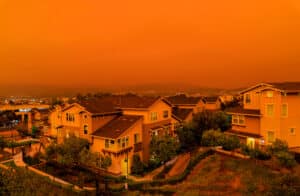
When wildfire smoke fills the LA air, your AC system becomes your first line of defense for keeping your indoor air clean and breathable. September through November is wildfire season in Southern California. Recent years have shown us that smoke can travel hundreds of miles to mess with air quality throughout Los Angeles and the San Fernando Valley. The January 2025 fires alone destroyed over 12,300 homes and forced 200,000 people to evacuate. You can’t control what’s happening outside, but you can definitely protect your indoor air quality. Your family’s health depends on it. The Reality of Wildfire Impact The Eaton and Palisades fires are now some of the worst wildfires in California history. During the worst days of the January 2025 fires, twelve air quality sensors near the fires showed PM2.5 levels in the “Hazardous” range. That’s scary stuff. EPA stations detected bad PM2.5 levels reaching “Unhealthy” and “Unhealthy for Sensitive Groups” in downtown LA and Compton. And that’s not just an outdoor problem. How Smoke Gets Into Your Home Wildfire smoke doesn’t stay outside. Those tiny particles slip through windows, doors, and even small cracks in your house. Once they’re inside, smoke particles can stick around for days